

Michele Frolla of Intrepid Italian
Intrepid Italian

Free Italian verb conjugator by Intrepid Italian

Vedere Conjugation

Complete conjugation tables for the Italian verb vedere (to see)

Free verb conjugator

Conjugate Italian Verbs

Search for any Italian verb to see its complete conjugation

Try:

Selected verb:

vedere

(to see)
irregular
Quiz yourself on vedere →
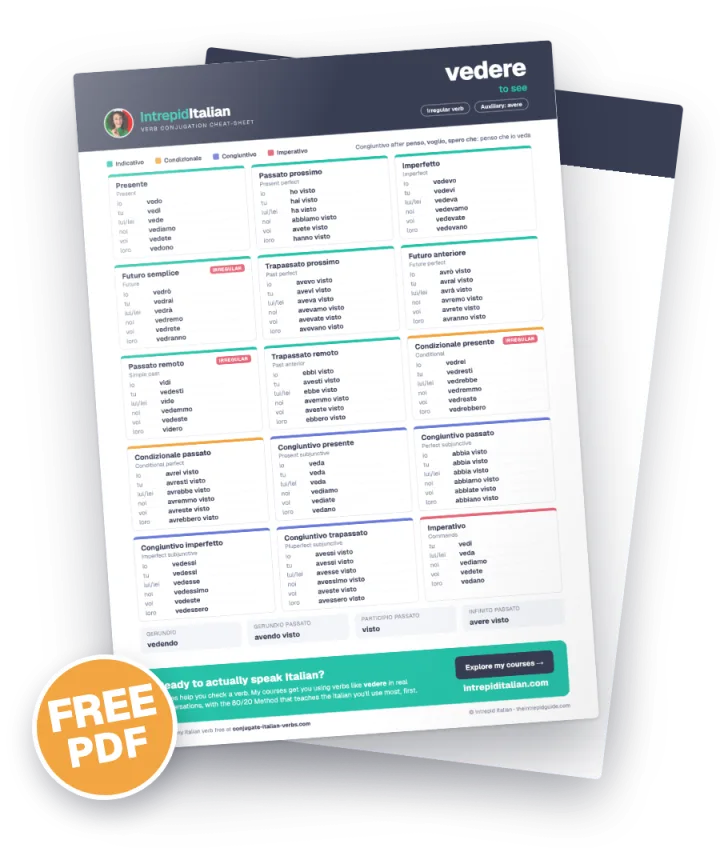
Get your FREE vedere cheat-sheetEvery tense on one printable PDF page. Download it free ↓

vedere

irregular

to see

Irregular in: passato remoto, futuro, condizionale, participio passato

Compound tenses use avere
Presente
iovedo
tuvedi
lui/leivede
noivediamo
voivedete
lorovedono
Imperfetto
iovedevo
tuvedevi
lui/leivedeva
noivedevamo
voivedevate
lorovedevano
Passato Prossimo
ioho visto
tuhai visto
lui/leiha visto
noiabbiamo visto
voiavete visto
lorohanno visto
Trapassato Prossimo
ioavevo visto
tuavevi visto
lui/leiaveva visto
noiavevamo visto
voiavevate visto
loroavevano visto
Passato Remoto
iovidi
tuvedesti
lui/leivide
noivedemmo
voivedeste
lorovidero
Trapassato Remoto
ioebbi visto
tuavesti visto
lui/leiebbe visto
noiavemmo visto
voiaveste visto
loroebbero visto
Futuro Semplice
iovedrò
tuvedrai
lui/leivedrà
noivedremo
voivedrete
lorovedranno
Futuro Anteriore
ioavrò visto
tuavrai visto
lui/leiavrà visto
noiavremo visto
voiavrete visto
loroavranno visto
Presente
ioveda
tuveda
lui/leiveda
noivediamo
voivediate
lorovedano
Passato
ioabbia visto
tuabbia visto
lui/leiabbia visto
noiabbiamo visto
voiabbiate visto
loroabbiano visto
Imperfetto
iovedessi
tuvedessi
lui/leivedesse
noivedessimo
voivedeste
lorovedessero
Trapassato
ioavessi visto
tuavessi visto
lui/leiavesse visto
noiavessimo visto
voiaveste visto
loroavessero visto
Presente
iovedrei
tuvedresti
lui/leivedrebbe
noivedremmo
voivedreste
lorovedrebbero
Passato
ioavrei visto
tuavresti visto
lui/leiavrebbe visto
noiavremmo visto
voiavreste visto
loroavrebbero visto
Presente
tuvedi
lui/leiveda
noivediamo
voivedete
lorovedano
Infinito
Presentevedere
Passatoavere visto
Gerundio
Presentevedendo
Passatoavendo visto
Participio
Presentevedente
Passatovisto
Preview of the free vedere conjugation cheat-sheet
Free 1-page PDF

Get your FREE vedere cheat-sheet

Every tense of vedere (to see) on one printable page.

  • ✔ All 14 tenses + the imperative
  • ✔ English tense names, irregulars flagged
  • ✔ Print it, stick it on the fridge, practise!

We respect your privacy. Unsubscribe at any time.

Free ebook: How to learn Italian so fast it feels like cheating

How to learn Italian SO FAST it feels like cheating![FREE 30-Page eBook]

Just tell me where to send it!

Types of language learners: find out your Italian level

🇮🇹 What is your Italian level? ✏️ Take the FREE test!

Test your grammar, vocabulary, reading and listening, get your level from A1 to C2, and see the best next step for you.

Take the free test →

Examples and common mistakes

How to use vedere in Italian

Vedere means 'to see', and also 'to meet up with' in the very common ci vediamo. It takes avere, the past participle is usually visto (veduto is rare), and the future contracts to vedrò.

Vedere in example sentences

  • Presente

    Non vedo bene senza occhiali.

    I can't see well without my glasses.

  • Presente

    Ci vediamo domani alle dieci!

    See you tomorrow at ten!

  • Passato prossimo

    Hai visto il Colosseo di notte?

    Have you seen the Colosseum at night?

  • Imperfetto

    Da bambina vedevo i nonni ogni domenica.

    As a girl I saw my grandparents every Sunday.

  • Futuro semplice

    Lo vedremo a Natale.

    We'll see him at Christmas.

  • Imperativo

    Vedi se c'è il latte in frigo, per favore.

    See if there's milk in the fridge, please.

Common mistakes with vedere

  • Wrong: Vediamo domani!

    Right: Ci vediamo domani!

    'See you' is ci vediamo, literally 'we see each other'. Without ci, vediamo means 'let's see'.

  • Wrong: Ti vederò sabato.

    Right: Ti vedrò sabato.

    The future of vedere drops the e: vedrò, vedrai, vedrà.

  • Wrong: Ho vista Maria ieri.

    Right: Ho visto Maria ieri.

    With avere, the participle stays visto when the object comes after the verb, even if the person is female.