

Michele Frolla of Intrepid Italian
Intrepid Italian

Free Italian verb conjugator by Intrepid Italian

Sapere Conjugation

Complete conjugation tables for the Italian verb sapere (to know)

Free verb conjugator

Conjugate Italian Verbs

Search for any Italian verb to see its complete conjugation

Try:

Selected verb:

sapere

(to know)
irregular
Quiz yourself on sapere →
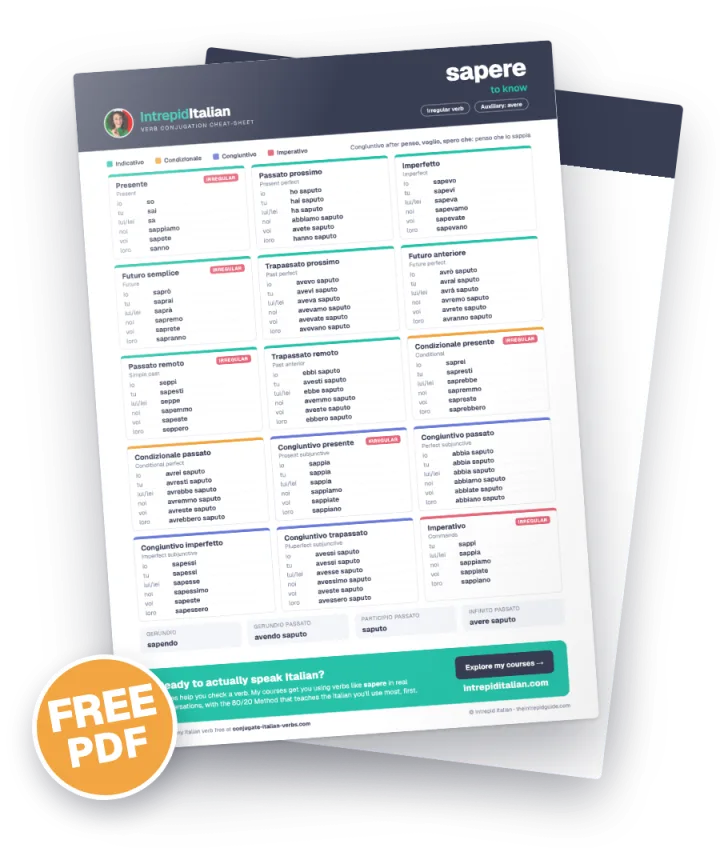
Get your FREE sapere cheat-sheetEvery tense on one printable PDF page. Download it free ↓

sapere

irregular

to know

Irregular in: presente, passato remoto, futuro, condizionale, congiuntivo presente, imperativo

Compound tenses use avere
Presente
ioso
tusai
lui/leisa
noisappiamo
voisapete
lorosanno
Imperfetto
iosapevo
tusapevi
lui/leisapeva
noisapevamo
voisapevate
lorosapevano
Passato Prossimo
ioho saputo
tuhai saputo
lui/leiha saputo
noiabbiamo saputo
voiavete saputo
lorohanno saputo
Trapassato Prossimo
ioavevo saputo
tuavevi saputo
lui/leiaveva saputo
noiavevamo saputo
voiavevate saputo
loroavevano saputo
Passato Remoto
ioseppi
tusapesti
lui/leiseppe
noisapemmo
voisapeste
loroseppero
Trapassato Remoto
ioebbi saputo
tuavesti saputo
lui/leiebbe saputo
noiavemmo saputo
voiaveste saputo
loroebbero saputo
Futuro Semplice
iosaprò
tusaprai
lui/leisaprà
noisapremo
voisaprete
lorosapranno
Futuro Anteriore
ioavrò saputo
tuavrai saputo
lui/leiavrà saputo
noiavremo saputo
voiavrete saputo
loroavranno saputo
Presente
iosappia
tusappia
lui/leisappia
noisappiamo
voisappiate
lorosappiano
Passato
ioabbia saputo
tuabbia saputo
lui/leiabbia saputo
noiabbiamo saputo
voiabbiate saputo
loroabbiano saputo
Imperfetto
iosapessi
tusapessi
lui/leisapesse
noisapessimo
voisapeste
lorosapessero
Trapassato
ioavessi saputo
tuavessi saputo
lui/leiavesse saputo
noiavessimo saputo
voiaveste saputo
loroavessero saputo
Presente
iosaprei
tusapresti
lui/leisaprebbe
noisapremmo
voisapreste
lorosaprebbero
Passato
ioavrei saputo
tuavresti saputo
lui/leiavrebbe saputo
noiavremmo saputo
voiavreste saputo
loroavrebbero saputo
Presente
tusappi
lui/leisappia
noisappiamo
voisappiate
lorosappiano
Infinito
Presentesapere
Passatoavere saputo
Gerundio
Presentesapendo
Passatoavendo saputo
Participio
Presentenot in use
Passatosaputo
Preview of the free sapere conjugation cheat-sheet
Free 1-page PDF

Get your FREE sapere cheat-sheet

Every tense of sapere (to know) on one printable page.

  • ✔ All 14 tenses + the imperative
  • ✔ English tense names, irregulars flagged
  • ✔ Print it, stick it on the fridge, practise!
We respect your privacy. Unsubscribe at any time.

Free ebook: How to learn Italian so fast it feels like cheating

How to learn Italian SO FAST it feels like cheating![FREE 30-Page eBook]

Just tell me where to send it!

Types of language learners: find out your Italian level

🇮🇹 What is your Italian level? ✏️ Take the FREE test!

Test your grammar, vocabulary, reading and listening, get your level from A1 to C2, and see the best next step for you.

Take the free test →

Examples and common mistakes

How to use sapere in Italian

Sapere means 'to know' a fact or piece of information, and 'to know how to' do something (so nuotare). It is irregular (so, sai, sa, sappiamo, sapete, sanno; futuro saprò; congiuntivo sappia) and takes avere.

Sapere in example sentences

  • Presente

    Scusi, sa dov'è la fermata dell'autobus?

    Excuse me, do you know where the bus stop is? (formal)

  • Presente

    Sai cucinare la carbonara?

    Do you know how to make carbonara?

  • Passato prossimo

    Ho saputo che ti sposi, congratulazioni!

    I heard you're getting married, congratulations!

  • Imperfetto

    Non sapevo che fossi in Italia.

    I didn't know you were in Italy.

  • Futuro semplice

    Saprò i risultati la settimana prossima.

    I'll know the results next week.

  • Congiuntivo presente

    Non credo che Luca sappia parlare inglese.

    I don't think Luca can speak English.

Common mistakes with sapere

  • Wrong: So Marco da anni.

    Right: Conosco Marco da anni.

    For people and places you are familiar with, use conoscere. Sapere is for facts and skills.

  • Wrong: Lui non sà niente.

    Right: Lui non sa niente.

    Unlike dà, the form sa never takes an accent.

  • Wrong: So come nuotare.

    Right: So nuotare.

    To say you know how to do something, put the infinitive straight after sapere, with no come.